Behind the Lens: A Conversation with Henry Diltz
Ahead of his live storytelling evening at Roxy Cinema, the legendary photographer reflects on the people, places and chance encounters that shaped his remarkable career.
You may not know who Henry Diltz is, but you have certainly seen his photographs. Long before he became the photographer behind some of the most iconic images of The Doors, Neil Young, the Eagles and James Taylor—and many of the most enduring images in rock history—Diltz was a musician himself, traveling and performing with the Modern Folk Quartet, fully immersed in the world he would later come to document.
Born in Kansas City, Diltz spent much of his childhood living abroad, including time in postwar Tokyo, Bangkok and later Germany. Moving between countries and cultures at a young age shaped the way he learned to observe people and environments closely—a sensibility that would later define his work as a photographer.
Photography entered his life almost by accident. While on tour, Diltz impulsively picked up a secondhand camera, shot a roll of film, and developed it upon returning home. When the slides were projected onto a wall, something shifted. What began as curiosity quickly became a way of seeing—one that grew organically out of the same creative world he was already moving through as a musician.
The images that followed were never staged or imposed. Taken inside rehearsal rooms, hotel rooms, studios, and quiet in-between moments, they became inseparable from the music itself—records of a community whose shared joy was rooted in the act of making music. Though he was one of the most prolific photographers of the Laurel Canyon era, Diltz also made his mark in New York, where he co-founded the Morrison Hotel Gallery in SoHo.
On Sunday, March 8, Diltz will present Behind the Lens at The Roxy Cinema, a live presentation that weaves together photography, film, music and personal stories from his years documenting artists of the 1960s and ’70s.
In light of the event, we spoke with Henry Diltz about chance, curiosity, and what it looks like to let life lead the way.
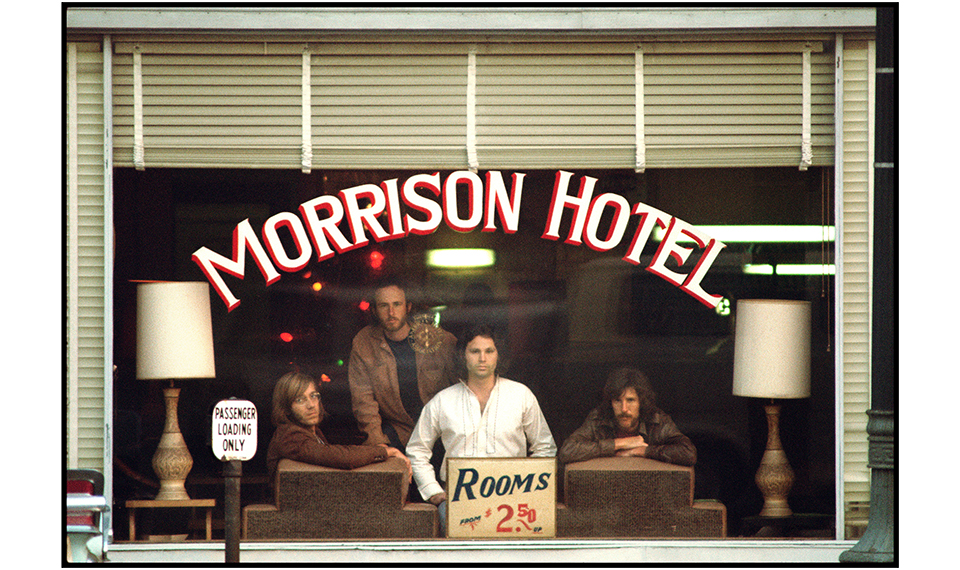
The Doors, Morrison Hotel, Los Angeles, CA, 1969
Hillary Sproul: When I first moved to New York from rural Maine, I genuinely thought the Morrison Hotel Gallery must be where that album cover was taken. I didn’t yet know the story behind your iconic LA photograph. How did the gallery begin?
Henry Diltz: We opened the gallery first on Spring Street. Before that, we spent about a year going across the country doing pop-up galleries—weekend shows where we’d rent a space in a hotel or shopping center. When we got to New York, my partner Peter Blachley found a little storefront that was empty. We couldn’t afford a big lease, but we said, “What if we give you a few grand for the weekend while it’s empty?” That turned into staying longer, and eventually we moved to Prince Street.
One day, Peter and I were standing across the street looking at our window. We had a big blow-up of the Morrison Hotel album cover in the bottom half of the window. People would stop, stare at it, and then walk inside. I said, “That picture is a magnet.” Then I said, “Now look at the window above it—completely blank.” Peter said, “That’s a great idea.” He hired a painter the next day to paint “Morrison Hotel” on the window.
We didn’t name the gallery on purpose. It just happened because it drew people in.
I have a sense that you’ve taken a lot of photographs that are almost burned into our collective subconscious—where, when you think of a certain musician who’s now become iconic, it’s your image that comes to mind. Of course, in the moment that you’re taking it, you probably don’t realize the impact that image will have. Looking back, how does that feel?
HD: I call them happy accidents. I’m not like, “Hey, I took that photo.” I’m not that guy at all. Man, I mean, I was lucky enough to be around and I accidentally picked up a camera. I was a folk musician with the Modern Folk Quartet. I played the banjo and we sang four-part harmonies.
In ’66, we were taking what turned out to be our last trip across the country. We were leaving a little town in Michigan one morning after playing at the University of Michigan. We were in our van and someone looked out the window and said, “Look, a second-hand store.” We had to pull in there. I mean, we’re musicians, we’re having a lark. And as we walked in, there was a table of used cameras right inside the door. And the guy in my group, Cyrus Faryar—he was in front of me—and without even stopping, he reached his hand out and said, “Oh, a camera. I need one.” And he picked it up. And I didn’t even stop either. I just said, “Why not?” and got one too, impulsively.
For the next few weeks, we were driving back to LA, and we would stop along the way and get out and take pictures of each other—a field of cows, a junkyard, all kinds of things. When we got to LA, I developed the film and said, “Well, let’s have a slideshow.” So we got all of our stoned hippie friends together and had this slideshow of what we did on our tour. For me, that was the moment I became a photographer, because when that first slide hit the wall in the darkness, glowing, I went, “Oh my God, this is amazing. It’s magic. It’s like we’re right there.” I remember standing there and taking that picture, and I’m right back there now. I thought that was just a miracle.
So right then, I said, “I am going to take more of these things so we can have more of these slideshows,” because it was fun. So I started photographing all my friends around me up in Laurel Canyon, where we all lived. There was Mama Cass, Stephen Stills, Neil Young, Joni Mitchell. They were fellow musicians. And eventually people started to say, “Hey, I could use this for a publicity photo.” So I accidentally segued into the photo business.
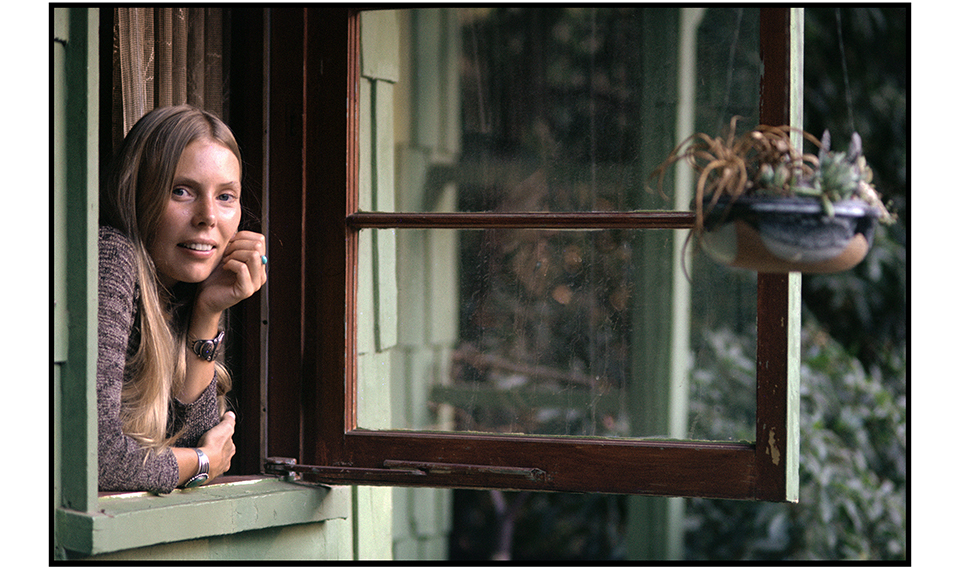
Joni Mitchell, “Our House,” Laurel Canyon, CA, 1970
When you were on the road with bands as a photographer, did you ever feel like you wished you were onstage too?
HD: No, not at all. But I love music. I mean, look, I went on the road with The Monkees. I went on the road with The Eagles. I went on the road with Crosby, Stills & Nash. I went all around the world in ’74 with David Cassidy. And with David, actually, there was a song in the set where I’d put my camera down and pick up a harmonica and go play for one song.
So I got to be right there to watch all my favorite music. To stand there and watch The Beach Boys, I watched Neil Young and watched Joni Mitchell. It was wonderful. I still had one foot in music a little bit. Our group did a single with Phil Spector. We’d broken up in ’66. And, well, ten years later, in ’76, we got back together again. So I’d been taking pictures for ten years. And then we got back together again for a couple of years. So I’ve been in and out of music.
Was it always music from the beginning for you?
HD: I think that music is in my genes. My mother played the piano all the time and my dad played the cello. My parents worked for TWA—my mother was a stewardess and my father was a pilot—so I was born in Kansas City, which was a TWA hub. Then we moved to New York.
My father joined the Army Air Corps when World War II broke out, and he died in a plane crash testing B-29s over Utah, trying to land in the dark. My mom had two little boys, me and my younger brother, and after a year or two she remarried so we’d have a father. He worked in the State Department. When I was nine years old, we moved to Tokyo. It was 1947, two years after the war, and everything was bombed out. We were the occupying force, but a friendly occupying force. I lived there for five years. Those were formative years. I had that Japanese feel and philosophy around me, and that had a lot to do with loving life and loving people.
I loved animals. I wanted to be a forest ranger. I applied to the University of Montana and I got accepted. I was going to work with grizzly bears. And my mother, that summer, she said, “Your father has been assigned to Bonn, Germany—so you can go to Montana or come to Europe with us.” I was like, these are turning points. That was a big, total change in my life. I never became a forest ranger. Instead, I went to this great international school.
I was going to college in Munich when I found out that sons of deceased veterans could take the Service Academy exam without a congressional appointment. I wrote a letter, took the test and got accepted to West Point. I thought, “Oh hell no.” I was a beatnik! But they said it was a rare opportunity, so I went. I loved it. Military life was easy.
But I was listening to Pete Seeger records and playing the banjo and I just fell in love with it. I knew I had to get out of West Point. I flunked math on purpose. I bought a banjo and went to Hawaii. Every day I came home from classes and played for hours. I was hypnotized. That led to singing in coffee houses, coming to LA to try to get a record deal, traveling across the country, picking up a camera and living in Laurel Canyon.
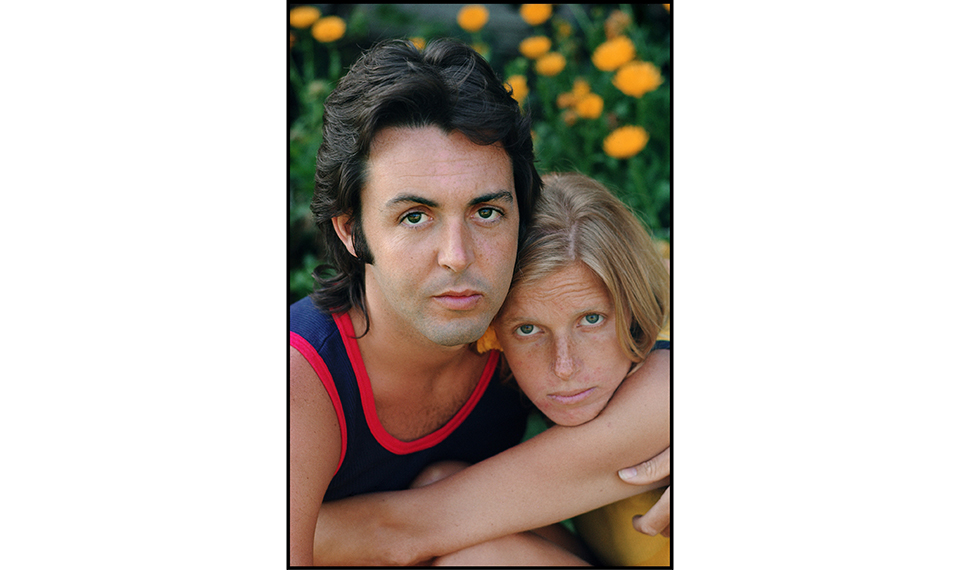
Paul & Linda McCartney, Cover of Life Magazine, 1971
It’s interesting, because so much of what you just described—what’s really cool—is that you were responding to opportunities as they came your way rather than thinking too hard about them. I get paralyzed by overthinking sometimes, and that works against you. Instead, you rode the wave.
HD: Are you a Virgo?
I’m Virgo rising, so I guess I’m part Virgo.
HD: Well, I’m a Virgo, and Virgos overanalyze things and think too much. But I had a friend of mine, Stanley Moss. And I would say, “Stanley, what if we get there and it’s not happening? Or what if…?” And he’d say, “Henry, let’s just let the universe decide.” So that’s been my motto: let the universe decide. Why did I go into that second-hand store to pick up the camera? Was that a complete accident? I don’t think so. We all come down here to learn on Earth, and we all have a divine plan because we’re all divine beings.
The spiritual teacher Swami Satchidananda led the morning exercise at Woodstock. I got one picture of him walking off the stage with a smile on his face. Later, friends of mine were devotees of his. He said, “Of course, we’re here to learn. We know that. Therefore, we’re all students. But you should think of yourself as the only student, and everybody else you ever meet is your teacher.”
I’ll take that with me.
HD: Let me ask you a question—what’s your Chinese zodiac?
I’m a Tiger.
HD: Oh my God—I’m a Tiger too! Tigers are friendly, they’re sociable—but they’re loners. And they hide in the bushes and watch the other animals. As a photographer, that is exactly what I do.
One of the images of yours I’ve always loved—I specifically love the selfie with Paul and Linda McCartney. I think it’s really charming.
HD: So here’s how that accidentally happened. I was in New York. I had a little apartment in the Village. We were there because all the concerts were on the East Coast. And I met this girl in a photo lab—that was Linda Eastman. We went out to lunch a couple of times. We were friends, fellow photographers. Not really close, but I knew her. If I was in New York and she was there, we’d go have lunch. Well, a couple of years later, I was amazed to see that she had married Paul McCartney.
She called me one day in ’71—when I was back on the West Coast—and said, “Henry, Paul and I are out here in Malibu and we need to have a portrait taken of us, and I can’t take it. It’s got to be the two of us. Would you come out here and take a picture?” So I went out and spent the day with them in the backyard by the pool. At the end of the day, we took a beautiful shot of them up in each other’s arms with flowers in the background. Then Linda said, “Now we need to see these pictures first thing in the morning because we have to pick one for the cover of Life magazine.” That was the Holy Grail, right? For photographers, at least. And I didn’t even know. She didn’t tell me until we were all done.
So, okay, I got it developed overnight, brought it back, and the lady from Life was waiting in the living room while they picked out the photo they wanted. They handed her the slide, she put it in her purse, drove to the airport, and flew to New York. And that was how it became the cover of Life magazine.
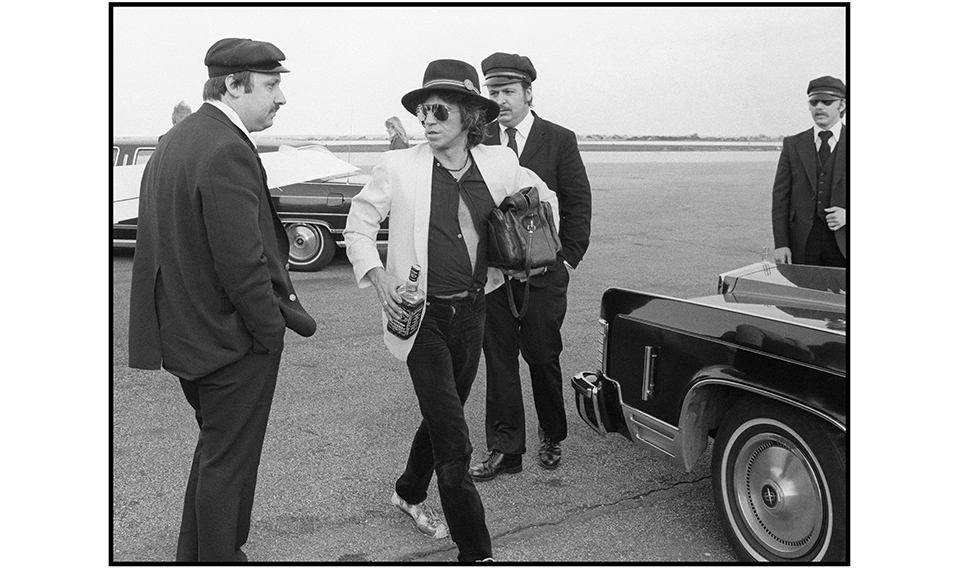
Keith Richards, Holding a Bottle of Jack Daniels, Midwest Airport, 1979
I’ve always been fascinated by how musicians become mythologized. They become more like symbols rather than the humans they actually were. For instance, your photos of The Doors capture this almost mythic figure—but Jim Morrison was just a person.
HD: Okay, I get that question a lot—what was Jim Morrison really like? And I say, okay, here’s my one-word description of him: bemused. Quietly amused. I’d see him around town in a store with his girlfriend and he’d give a little wink and a nod from across the store. He was never the guy who would run up to you and say, “Hey man, guess what happened?” Never demonstrative in any way. Always quietly watching.
I don’t know what his Chinese animal was, but I would say he was a perfect Tiger—because he was very quiet, and he would listen, and he would watch. He was interested in people. You could see the wheels turning in his head, the poetry he would write about it.
After we did the Morrison Hotel cover that day in December of ’69, Jim said, “Let’s go get a drink.” So we went a few blocks to Skid Row and discovered a bar called the Hard Rock Cafe. No one had heard of that before—it was before its time. It was a little funky bar, a little wino bar. He loved it because he loved to buy a couple of beers for some of the old winos and listen to them talk. He didn’t really say anything to anybody. He would smile—that wonderful, sly little smile—and nod his head. And these guys thought he was the greatest guy in the world. They didn’t know The Doors. They didn’t know anything about that.
He was alive. He was interested in wherever he was and whatever he was doing. This guy was very interested in us as people. That’s Jim Morrison.
Well, I think that’s what we were talking about with “the Tiger” or you “watching in the bushes.” The Tiger is the artist. Just observing humanity and sitting back and making art out of it. I think that’s really beautiful.
HD: Yeah, that’s right. I had a spiritual teacher once. She was just a beautiful lady and I would go to her house for a session and she’d say, “How are you?” and I’d say, “I’m fine—but my car’s broken down, my girlfriend ran away, I can’t pay the rent,” or whatever else, and she would just look at you with a big smile and say, “Isn’t it great?”
A hundred times she did that and it made me see… I say it in all the worst moments. I say, “Isn’t it great?” Isn’t it great that we can still feel alive?
Purchase tickets for the March 8 live storytelling event—here
WORDS Hillary Sproul
PHOTOGRAPHY Henry Diltz
For more information about Henry Diltz’s photographs & his ‘Behind the Lens’ slideshow tour, visit henrydiltz.com